
This is one of those illusions that sounds clever—but the “correct answer is one leg” claim doesn’t actually hold up.
Let’s clear it up properly.
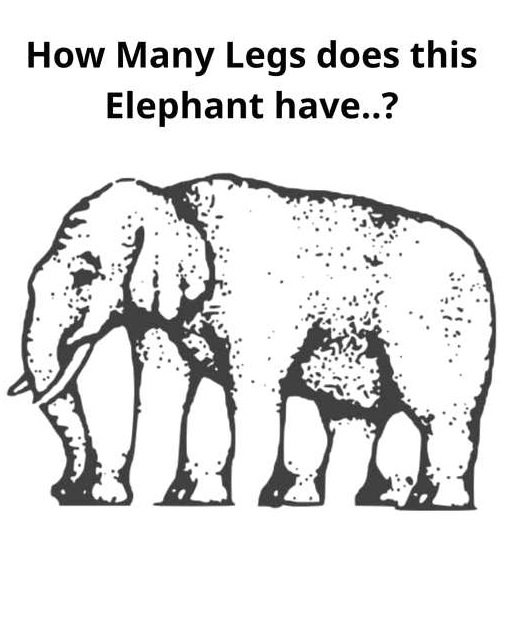
The image you’re referring to is the Shepard Elephant illusion, created by Roger Shepard and published in Mind Sights.
What’s really going on?
- The elephant still has 4 legs—that’s the intended structure.
- The illusion works because the feet are misaligned with the legs.
- The artist removed the correct feet and placed extra “floating” feet between the legs.
- Your brain tries to match each leg to a foot—but the connections don’t make sense.
Why people get different answers:
- Some see 4 legs (focusing on the upper structure)
- Some see 5 legs or more (because of extra feet)
- Some say 4 legs and 5 feet (which is closer to what’s visually happening)
The key insight:
There isn’t a clean, logical way to count the legs—because the drawing is intentionally impossible. It breaks the normal relationship between legs and feet.
So no, it’s not “one leg.”
It’s a visual paradox designed to confuse how your brain connects parts of an object.
That’s what makes it such a classic illusion—it doesn’t just trick your eyes, it breaks your expectations of how objects should work.